

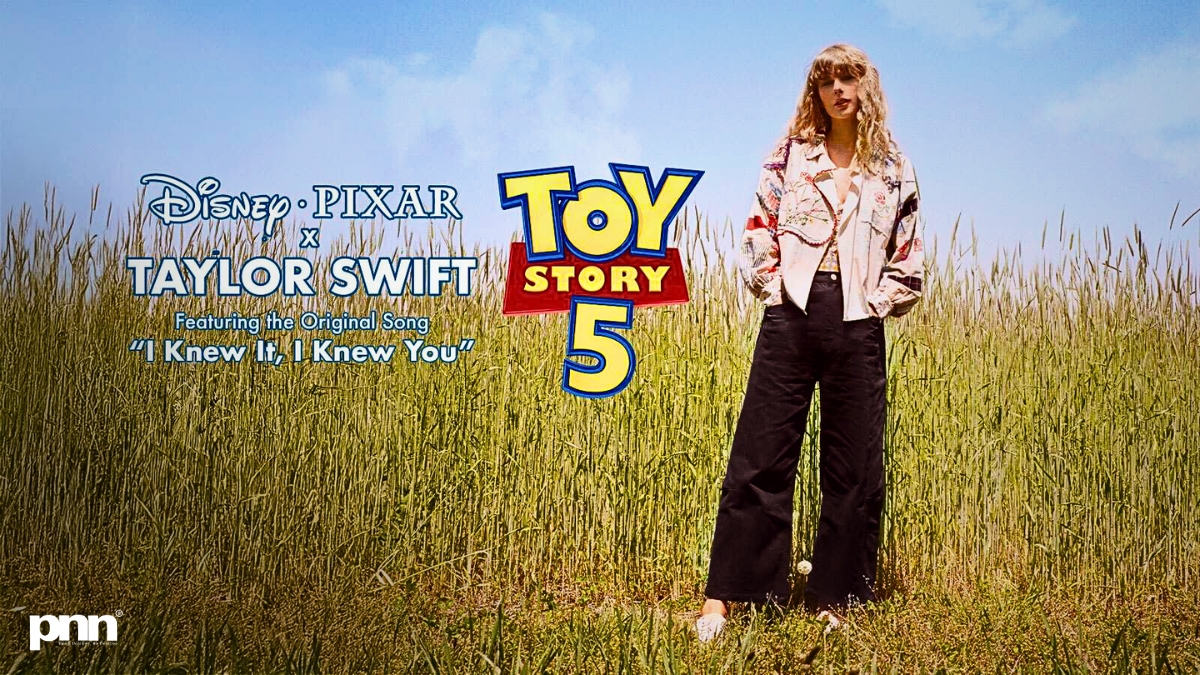
Mumbai (Maharashtra) [India], June 6: There are announcements that make headlines, and then there are announcements that seem custom-built for the internet.
Taylor Swift recording an original song for Toy Story 5 belongs firmly in the second category.
On paper, it sounds simple enough. One of the world’s biggest music stars has written and recorded a new song for Jessie, the spirited cowgirl who has remained one of Pixar’s most beloved characters since Toy Story 2 first arrived more than two decades ago. According to Swift, contributing music to Jessie was a dream project and one of the most personal soundtrack experiences of her career.
In reality, however, this announcement says something much larger about modern entertainment.
It is not merely about a song.
It is about nostalgia becoming a billion-dollar business model.
It is about Hollywood understanding that emotional attachment may be the most valuable currency in entertainment.
And perhaps most importantly, it is about two of the most powerful fan ecosystems in the world colliding at exactly the right moment.
Because if there is one thing Hollywood loves almost as much as storytelling, it is discovering a way to bring together multiple audiences under one very profitable roof.
And honestly, who could blame them?
The Perfect Marriage Of Nostalgia And Stardom
Few entertainment franchises possess the cultural longevity of Toy Story.
The original film changed animation forever when it debuted in 1995, becoming the first feature-length movie created entirely with computer animation. Since then, the franchise has generated billions of dollars globally through theatrical releases, merchandise, licensing, theme park attractions, and home entertainment products.
Jessie herself became one of Pixar’s most emotionally resonant characters.
Her heartbreaking backstory in Toy Story 2 remains one of animation’s most memorable sequences, proving that a toy cowboy hat and a melancholy song could reduce entire generations to tears.
Now enters Taylor Swift.
Swift is no longer merely a musician.
She has evolved into a cultural ecosystem.
Her tours generate billions in economic activity. Her albums dominate streaming platforms. Her fanbase has become one of the most engaged communities in modern entertainment.
From a business perspective, pairing Swift with Toy Story feels almost suspiciously logical.
It is the kind of idea that probably made executives smile in several different boardrooms simultaneously.

Why Jessie Makes Sense For Taylor Swift
The interesting part of this collaboration is not merely that Swift is involved.
It is the character she chose.
Jessie has always represented themes that frequently appear throughout Swift’s songwriting career:
- Abandonment
- Resilience
- Personal identity
- Emotional growth
- Reinvention
These themes have defined both the character and the artist.
Swift’s ability to translate complex emotional experiences into accessible storytelling aligns naturally with Jessie’s narrative journey.
For Pixar, that creative overlap creates authenticity.
For Swift, it offers an opportunity to contribute to a franchise she reportedly admired growing up.
And for audiences?
It provides another reason to become emotionally invested before the movie even reaches theaters.
Marketing departments everywhere probably just framed that sentence.
The Economics Behind The Excitement
While official production figures for Toy Story 5 have not been fully disclosed, major Pixar productions routinely carry budgets exceeding $200 million.
Marketing campaigns often add tens of millions more.
That means every promotional advantage matters.
Taylor Swift’s involvement effectively creates a second marketing engine.
Instead of relying solely on traditional movie promotion, Disney now gains access to an audience that follows music releases, streaming charts, social media trends, and fan communities with almost military precision.
The numbers are difficult to ignore.
Swift’s music continues to generate billions of streams globally. Her concert film became one of the highest-grossing concert movies ever produced. Her social media reach spans hundreds of millions of followers.
In simpler terms, Disney did not just acquire a song.
They acquired attention.
And attention is becoming one of the rarest commodities in entertainment.
The Hollywood Formula Nobody Wants To Admit Exists
There was a time when celebrities joined animated films primarily as voice actors.
Today, studios pursue something bigger.
They pursue cultural convergence.
Modern entertainment increasingly revolves around combining established intellectual property with globally recognized personalities.
The formula is straightforward:
Take a beloved franchise.
Add a superstar.
Multiply audience interest.
Repeat.
To be fair, the strategy often works.
But there is a downside.
Some critics argue Hollywood has become increasingly reliant on familiar brands rather than original storytelling.
The concern is understandable.
Every major franchise revival raises the same question.
Are audiences genuinely asking for these sequels?
Or have studios simply become extremely good at convincing them they are?
The answer, as usual, probably sits somewhere in the middle.
The Positive Side Of The Story
Despite skepticism surrounding franchise expansions, there are legitimate reasons to celebrate this collaboration.
First, it introduces younger audiences to an iconic character.
Many children discovering Toy Story today were not even born when the earlier films premiered.
Second, original music still matters.
In an era dominated by remixes, catalog exploitation, and algorithm-driven playlists, investing in new soundtrack material demonstrates creative commitment.
Third, collaborations like this help preserve animation as a cultural event.
Streaming platforms have dramatically altered viewing habits, making theatrical releases increasingly difficult to position as must-see experiences.
A high-profile soundtrack contribution can help reignite that excitement.
That matters more than many people realize.
The Less Comfortable Questions
Of course, every glittering entertainment announcement arrives with shadows attached.
One concern involves franchise fatigue.
Hollywood has spent years mining nostalgia because nostalgia remains commercially reliable.
Unfortunately, reliability can become repetition.
Some audiences worry that beloved stories risk becoming endless content pipelines rather than complete artistic experiences.
Another concern involves expectations.
When a superstar becomes attached to a project, public attention sometimes shifts away from the film itself.
The conversation becomes less about the story and more about the celebrity involvement.
Pixar will undoubtedly hope audiences remember there is an actual movie attached to the soundtrack.
Strange concept, admittedly.
The Bigger Trend Hidden Beneath The Headlines
The truly fascinating aspect of this announcement is what it reveals about entertainment’s future.
Traditional barriers between industries continue disappearing.
Music influences cinema.
Cinema drives streaming.
Streaming fuels social media conversations.
Social media creates viral moments.
Viral moments become commercial opportunities.
The entire ecosystem feeds itself.
Taylor Swift joining Toy Story 5 reflects this reality perfectly.
It is not simply a singer contributing a song.
It is one entertainment universe intersecting with another.
The result is attention, engagement, and cultural momentum.
Three things every studio desperately wants.
What Happens Next
As Toy Story 5 moves closer to release, anticipation will continue growing.
Fans of Pixar want another emotionally satisfying chapter.
Swift fans want to hear how her songwriting interprets Jessie’s character.
Disney wants both groups purchasing tickets.
Everybody gets something.
At least in theory.
Whether the film ultimately justifies the excitement remains to be seen.
But from a promotional standpoint, the collaboration has already succeeded.
People are talking.
People are speculating.
People are emotionally invested.
And in modern entertainment, that battle is often half won before opening weekend even arrives.
Final Thoughts
Perhaps the most interesting thing about this story is that it feels inevitable.
A franchise built on childhood memories has partnered with an artist whose career has become deeply intertwined with nostalgia, storytelling, and emotional connection.
It is not a shocking decision.
It is almost suspiciously perfect.
And maybe that is why it works.
In an entertainment landscape obsessed with algorithms, analytics, and audience retention metrics, there remains something strangely comforting about a simple idea:
A songwriter admired for telling stories is writing one more story for a toy cowgirl who never stopped believing she had one worth telling.
Of course, Hollywood executives are undoubtedly thrilled about the revenue projections as well.
Some traditions never change.
