

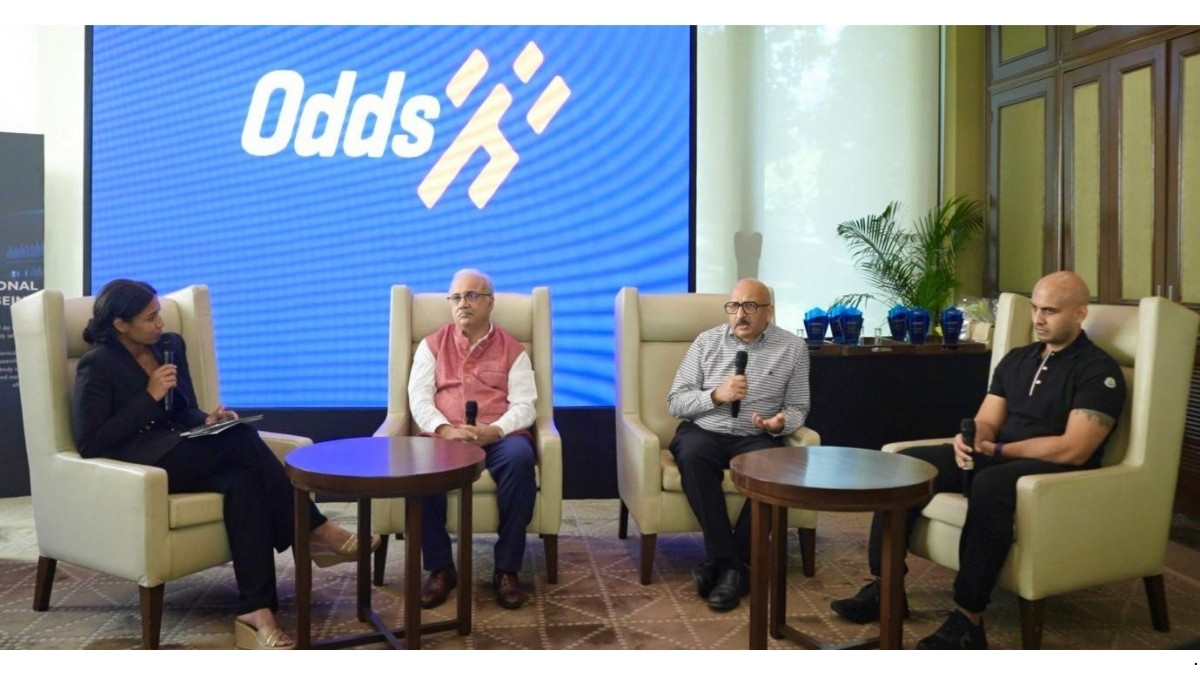
(L-R) Dr Divya, Dr Dheeraj Kapoor, Padma Shri Dr Praveen Chandra, Asad Hussain – Cardiometabolic Health Panel
New Delhi [India], September 18: What if ageing does not really begin when we start noticing it?
A closed-door symposium by ODDS Longevity, was the central idea behind The Silent Decade. At its heart was the Quantified Health Program (QHPTM), which brought together health data, medical science and expert guidance to understand the body way before your 30’s and 40’s, focusing on what is measurable and meaningful amid the noise around wellness.
With leading medical experts in attendance, the symposium sparked meaningful conversations around health, ageing, and prevention. Many distinguished voices gathered in one room acted as a seal of approval. This highlighted the importance of a more informed and preventive approach to health while creating a space for dialogue across disciplines.
Opening the symposium, Asad Hussain, Founder and CEO of ODDS Longevity, spoke about the platform’s approach to combining clinical expertise, human physiology and longitudinal data to understand how the body changes over time. “I see longevity differently. It is not a treatment or an end goal; it is an ongoing practice of understanding your body, measuring what matters and acting before disease begins”, Asad said.
The first conversation explored mechanical ageing, with Padma Shri Dr Ashok Rajgopal, Group Chairman of Orthopaedics at Medanta, reflecting on strength, mobility and physical capacity. Dr Rajgopal offered a perspective shaped by decades of treating musculoskeletal decline, while his own continued physical pursuits served as a reminder that ageing does not have to mean giving up physical capability. “Beyond that, physiological age and the actual age can often be very different. It brings a perspective and gives you an insight into your biology. The lab tests are static evaluations, and this is probably a dynamic evaluation, and I think you need a little bit of both. And this combination can give you irrefutable evidence,” Dr Rajgopal said.
The discussion introduced the idea of the Mechanical Age Quotient (MAQTM), looking at physical capacity as something that can be understood and potentially preserved long before pain or mobility issues appear.
The conversation then moved to Cardiometabolic Ageing (ODDS AXIONTM), bringing together Padma Shri Dr Praveen Chandra, Chairman of Interventional Cardiology at Medanta, and Dr Dheeraj Kapoor, Chief of Endocrinology at Artemis Hospitals. The discussion challenged the assumption that feeling well or having routine reports within range, necessarily means everything is fine underneath.
From early metabolic changes to cardiovascular health, the doctors explored the gap between being clinically ‘within range’ and being genuinely healthy and resilient. The larger message was clear: prevention is not simply about responding to abnormal numbers, but understanding the trajectory behind them. “Today, with gene testing, biochemical markers and lifestyle assessment, we can make a 30-year prediction of the occurrence of heart disease in people at the age of 20, 25 and 30 years,” said Dr Praveen Chandra.
This idea was then brought to life through a six-month case study presented by ODDS, showing improvements in VO₂ max, strength and overall physiological capacity through structured, supervised training. It offered a tangible look at how data and clinical guidance can translate into changes in everyday physical performance.
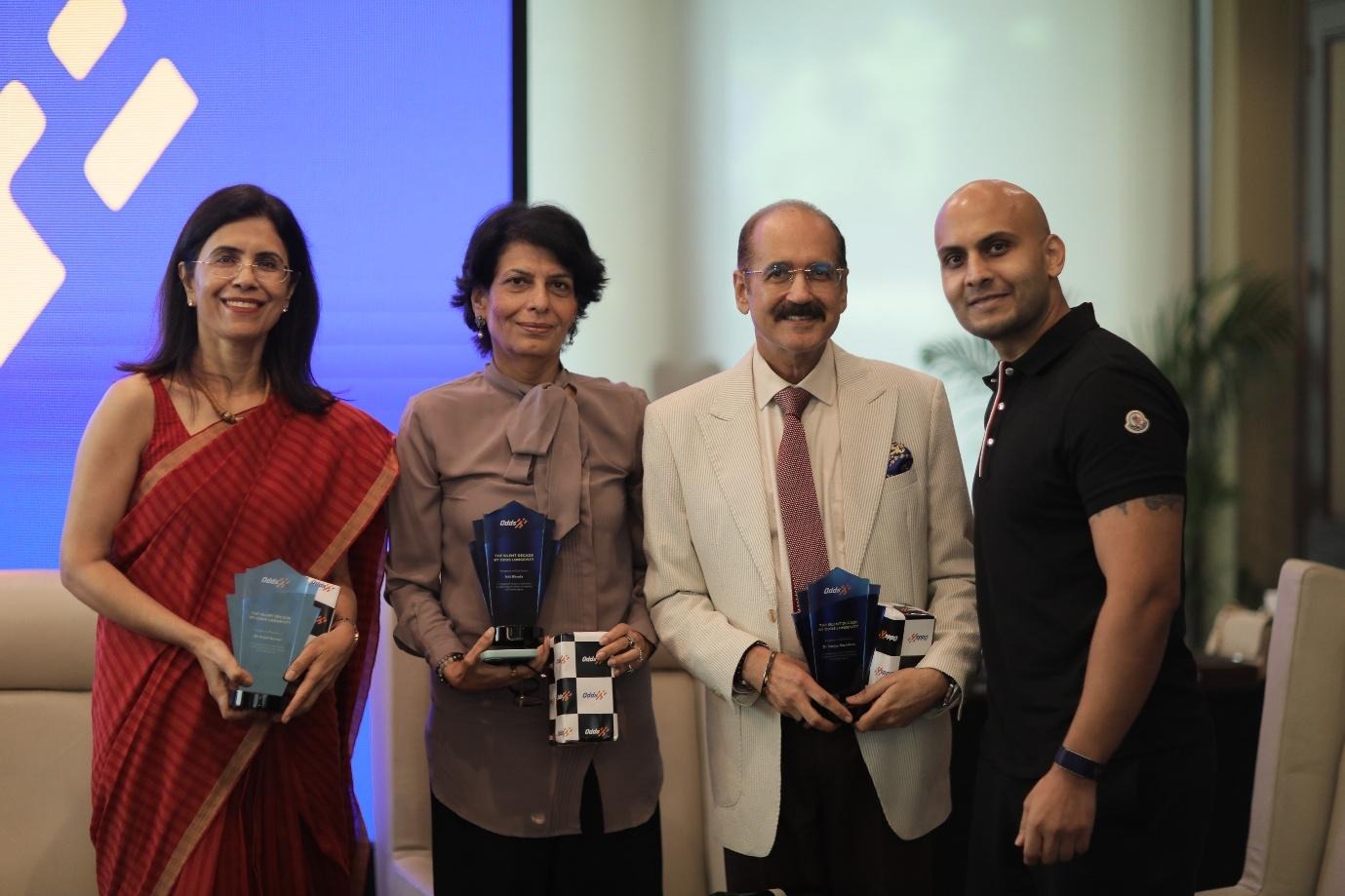
(L-R) Dr Anjali Kumar, Ishi Khosla, Dr Sanjay Sachdeva, Asad Hussain at Odds Longevity Symposium
The symposium also recognised distinguished contributors to Indian healthcare, including Padma Shri Dr Harsh Mahajan, a pioneer in diagnostics; Padmashri Dr Chandrakant Sambhaji Pandav, known as the Iodine Man of India for his work in public health nutrition; and Dr Sabhyata Gupta, whose work spans women’s health and maternal care. The ODDS Advisory Council, comprising Dr Anjali Kumar, Dr Sanjay Sachdeva and Ishi Khosla, were also acknowledged for their contribution to the platform’s larger vision.
As the afternoon moved towards its close, the conversation became more about every day routines. Kitty Kalra, Mini Shastri and Tanya Malik Chawla explored movement, Pilates, yoga, breathwork and personalised nutrition, bringing the conversation back to the habits that shape health over time. “For me, biohacking is simple: it’s the conscious control of your biology through data, habits, and environment”, said Tanya Malik Chawla, Functional Nutritionist & Biohacker. The discussion also touched on the growing world of biohacking, recovery modalities and the challenge of separating genuinely useful practices from wellness noise. The conversation looked at how these approaches can be meaningfully integrated with medical science, rather than followed simply because they are trending.
The Silent Decade brought together expertise across disciplines to look at health not as a single number or diagnosis, but as something that can be measured, understood and acted upon earlier. The coming together of such distinguished medical voices reinforced the importance of creating a more informed conversation around preventive health.
For ODDS Longevity, this is where the Quantified Health Program (QHPTM) comes in, creating a more structured, evidence-led way to bring together clinical expertise, individual health data and measurable markers of change. The larger aim was to move the conversation from simply treating disease to understanding health before disease begins, and helping individuals make more informed decisions about how they age.
