

New Delhi [India], September 28: A diagnosis of blood cancer no longer arrives with a single, standard answer. The past decade has quietly rewritten what treatment looks like for many patients — from the person who lives with chronic leukaemia for many years without needing immediate treatment, to the lymphoma patient whose own immune cells can be re-engineered in a laboratory to fight their disease. For families weighing treatment options in India, understanding how much has changed is often the first step towards making an informed decision.
Not All Leukaemias Are Emergencies
The phrase “you have leukaemia” tends to trigger a very specific kind of panic: images of immediate hospitalisation, drips, hair loss and weeks of intensive treatment. For some blood cancers, that picture is accurate. For others, it is not.
Chronic Lymphocytic Leukaemia (CLL) sits firmly in the second category. It develops when a type of infection-fighting white blood cell — the lymphocyte — begins to accumulate slowly in the blood, bone marrow and lymph nodes. Progression is measured in years, sometimes decades, and many people are diagnosed only because a routine blood test shows an unusually high white cell count. A significant proportion of patients feel entirely well at the point of diagnosis.
For low-risk patients, the standard international approach may be active surveillance — regular blood counts and clinical review, but no immediate treatment. This can feel deeply counterintuitive. Research has shown that starting treatment early in patients without symptoms does not necessarily improve outcomes, while exposing them to treatment-related side effects. In this specific disease, watching closely can be an important part of treatment.
When Treatment Is Needed, It Looks Different
When CLL does progress — signalled by falling blood counts, rapidly enlarging lymph nodes, drenching night sweats or repeated infections — the therapy available today bears little resemblance to what patients received even ten years ago.
Targeted oral medicines now form an important part of treatment for many people. BTK inhibitors and BCL-2 inhibitors work by blocking specific molecular pathways that leukaemia cells depend on to survive. Many patients can take daily oral medicines rather than undergoing repeated cycles of intravenous chemotherapy, and durable remissions are increasingly possible.
Perhaps more importantly, patients with high-risk genetic features — historically the group with the worst outcomes — are among those benefiting from this shift. Genetic testing has therefore become an important part of treatment planning because it can help determine which treatment approach is most appropriate.
At the Other End of the Spectrum
Aggressive lymphomas such as Large B-cell Lymphoma allow no such patience. These are fast-growing cancers where treatment often needs to begin quickly, and standard first-line combination chemotherapy and antibody therapy can achieve remission or cure in a significant number of patients.
The harder question is what to offer those whose disease returns or does not respond adequately to initial treatment.
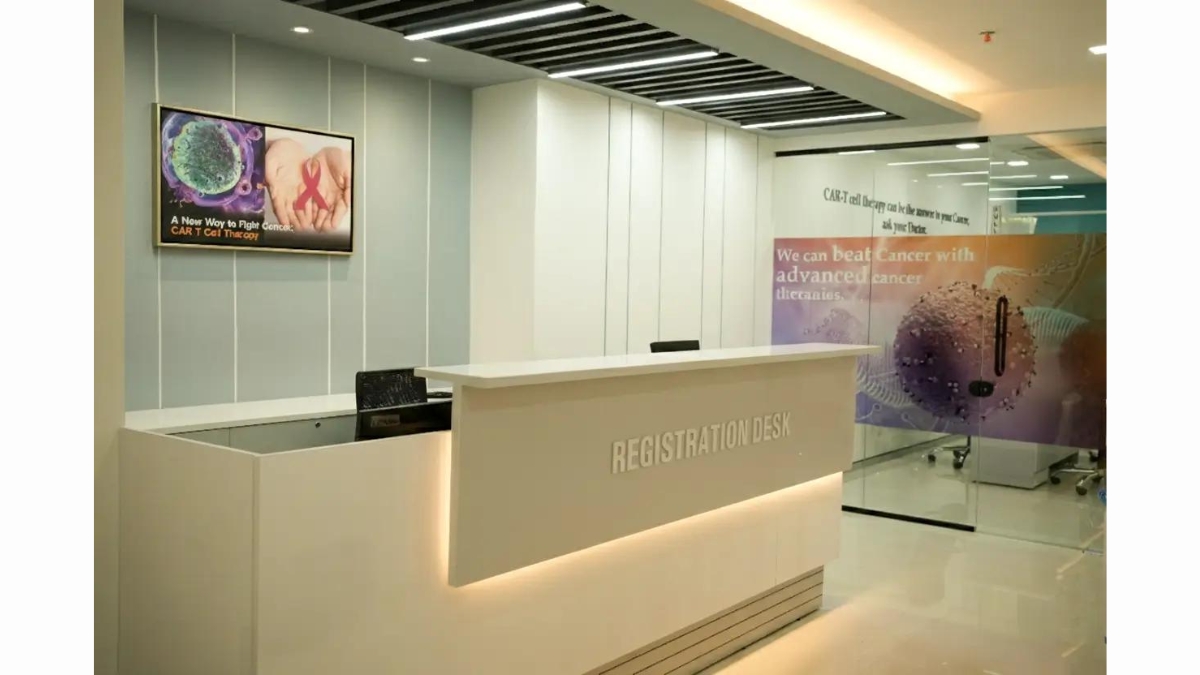
CAR-T cell therapy has, over the past several years, become an important treatment option for selected patients with certain relapsed or refractory blood cancers. The approach involves collecting a patient’s own T cells, genetically modifying them in a specialised laboratory to recognise cancer cells, and then infusing the cells back into the patient.
For some patients who have exhausted other treatment options, CAR-T therapy can produce significant and durable responses. However, it is a highly specialised treatment that requires careful patient selection, appropriate infrastructure and multidisciplinary expertise. The treatment journey also involves several stages, from cell collection and manufacturing to infusion and close monitoring afterwards.
What This Means for Indian Patients
The takeaway is not that blood cancer has become easy to treat — it has not. It is that the range of treatment options has widened substantially, and treatment decisions now depend on details that used to be less visible: the specific genetic and molecular characteristics of the cancer, the patient’s overall condition, previous treatments and the suitability of different therapeutic approaches.
For patients and families, three questions are worth asking of any treatment centre.
First, is molecular and genetic testing done routinely, and is it actively used to guide the treatment plan?
Second, is there a genuine multidisciplinary team — haematologists, transplant physicians, pathologists and cell therapy specialists — working together, or is care fragmented across referrals?
Third, is long-term follow-up built into the plan, or does the relationship end once the initial treatment phase is complete?
These questions matter far more today than they did a decade ago, because so much of what determines outcomes now happens beyond the infusion chair — in the genetic testing laboratory, the multidisciplinary meeting room and the follow-up clinics that monitor patients over time.
To learn more about modern care options, explore the educational resources in our Information Centre:
