

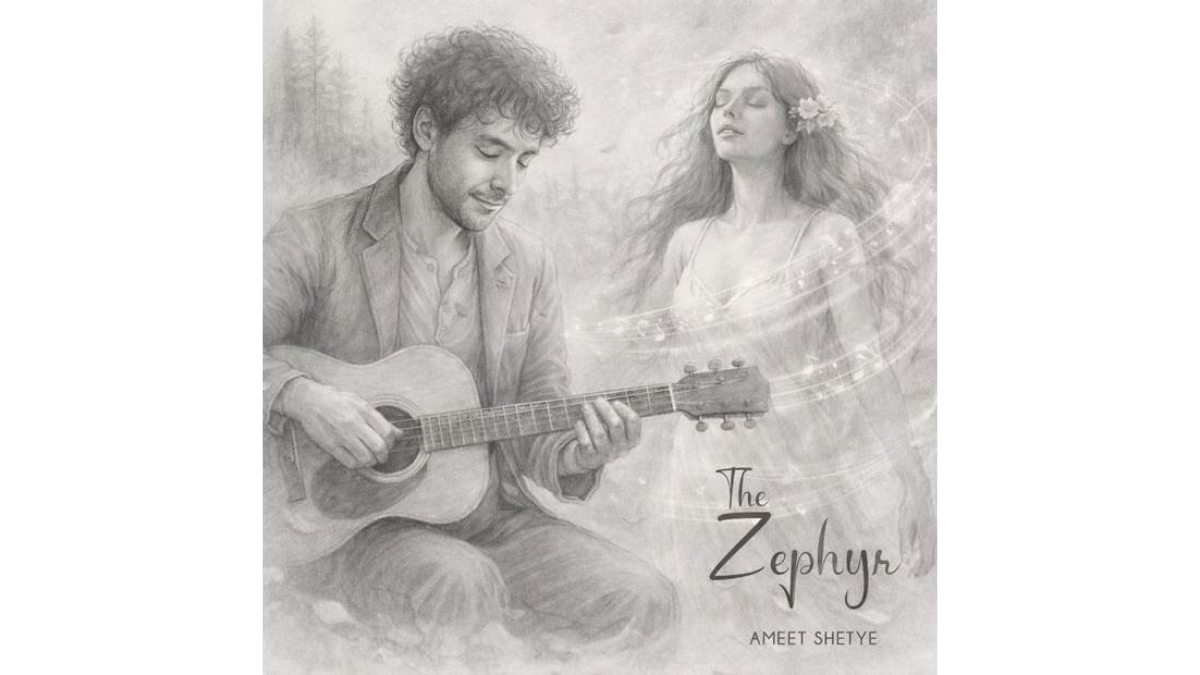
New Delhi [India], March 02: Composer and guitarist Ameet Shetye, whose earlier compositions have been sung by celebrated voices like Udit Narayan and Shankar Mahadevan, has taken a deeply personal turn with his latest instrumental release, The Zephyr. In this candid conversation, he reflects on the journey behind the piece and the emotion that shaped it.
Q: When you think back to the time you created The Zephyr, who were you emotionally in that phase of your life?
It began one fine December evening — Christmas Eve, to be precise. I came up with the intro riff on an electric guitar. At that time, it was just a feeling, just a phrase. Over the years, that tune slowly came into life and evolved into what you now hear in the solo guitar version. Emotionally, I was in a quiet, reflective space.
Q: There’s a quiet sensitivity in this track. Was there something you were feeling but not saying out loud?
As I started composing it further, I gradually imagined a misty morning. That imagery shaped the tune. Naturally, it became ethereal and open — almost like something ringing in your head. It wasn’t about saying something directly. It was about creating a feeling.
Q: The word The Zephyr suggests a soft breeze. Was the song meant to be gentle?
Yes — a gentle breeze. That’s exactly what it represents. The idea was softness, lightness, and subtle movement rather than intensity.
Q: Did you ever hesitate about releasing something so personal?
I make music that is quite personal anyway. There is no holding back. I create what I experience and feel — it’s always inside out.
Q: Was there a specific setting that inspired the full composition?
Once I discovered the riff, I imagined a situation that helped me build the piece further. The concept behind The Zephyr is very visual for me.
I see myself in a treehouse, wrapped in a misty morning breeze. Sunlight slowly leans in and gently wakes my muse from an eternal slumber. In that moment, time dissolves. Music finds me before I even reach for it.
That’s how the tune flowed.
Q: The track is just a single acoustic guitar. Why keep it so minimal?
The whole thing is raw. Usually, musicians add layers, instruments, arrangements — I’ve done that in the past too. I could have added synth pads or keys. But sometimes you just have to leave empty spaces. Just one acoustic guitar, yet it fills the sound spectrum on its own.
Q: Did creating The Zephyr change you as an artist?
Yes. It made me experiment with the concept of singularity. Earlier, I would compose for multiple instruments and build arrangements. Suddenly, it was just one guitar and a simple tune. That simplicity taught me something new.
Q: What do you hope listeners feel when they hear it alone, maybe with headphones on?
When I create an instrumental tune, it’s my journey. When someone listens to it, it becomes theirs. It might take them to a past memory, a journey, an intimate moment — the possibilities are limitless.
Q: Has anyone’s reaction stayed with you?
Yes. A friend once listened to it at sunrise and described exactly the same feeling I had imagined while composing it. That stayed with me.
Q: If The Zephyr were a chapter in your life story, what would it be called?
“You are all by yourself.”
With The Zephyr, Ameet Shetye returns to pure instrumental expression — not with grandeur, but with stillness. A gentle breeze, carried on six strings.
If you object to the content of this press release, please notify us at pr.error.rectification@gmail.com. We will respond and rectify the situation within 24 hours.
