

Surat (Gujarat) [India], May 14: There are some developments in manufacturing that stay limited to technical circles, and then there are those that quietly signal a larger shift taking place inside the industry. AM/NS India’s latest achievement at its Hazira pipe mill appears to fall in the second category.
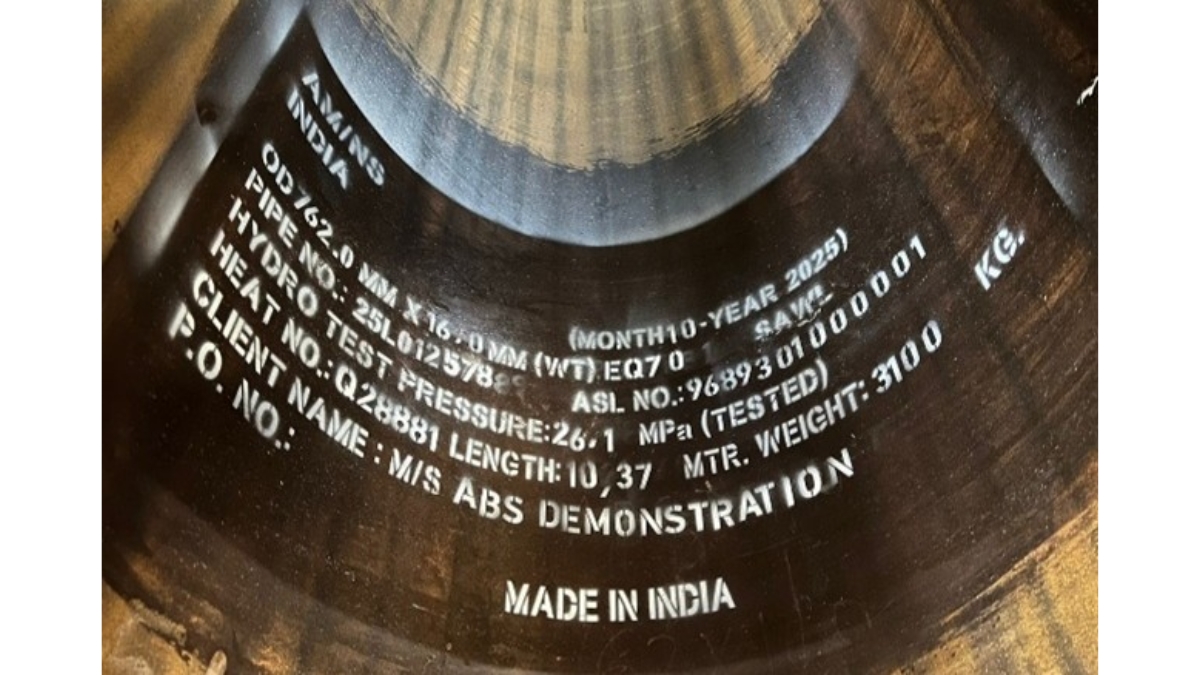
The company has successfully manufactured EQ70 ultra-high-strength welded pipes using Submerged Arc Welding (SAW) technology and secured certification from the American Bureau of Shipping (ABS), one of the globally recognised authorities for offshore and marine standards.
For the offshore engineering sector, this is not routine news.
Pipes of this grade are usually associated with highly specialised applications and, in many cases, imported supply chains. Manufacturing them through a welded process while meeting strict offshore performance standards is considered technically demanding, which is why the development is drawing attention across steel and marine engineering circles.
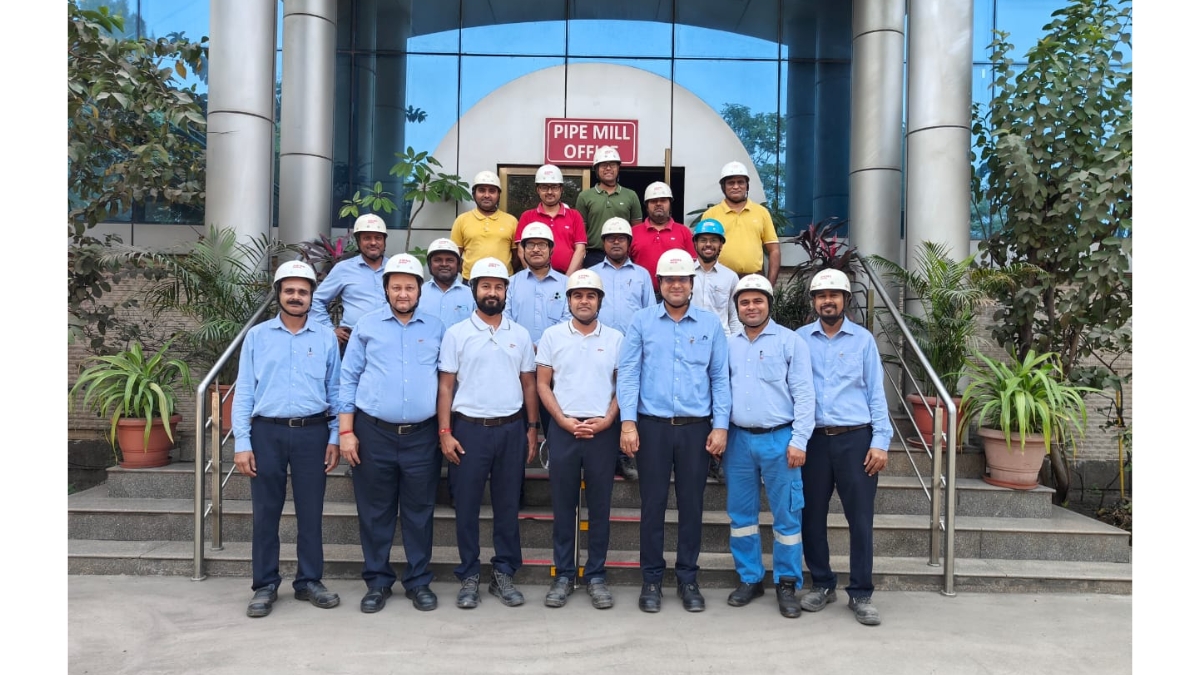
The work was carried out at AM/NS India’s Hazira-based Pipe Mill in Gujarat.
EQ70 steel, broadly equivalent to API 5L X100Q grade, is designed for demanding offshore conditions. With a minimum yield strength of 690 MPa along with high toughness characteristics, the material is meant for environments where structures are exposed to extreme operational stress over long durations.
The pipes are expected to be used in offshore applications such as jackup rig structures, leg bracing systems, and deepwater pipeline infrastructure.
People familiar with offshore construction say the advantage of higher-strength grades like EQ70 is fairly straightforward. The stronger the material, the thinner and lighter the pipe can be without compromising structural performance. In practical terms, that can reduce weight loads, improve transport efficiency, and support more economical project execution.
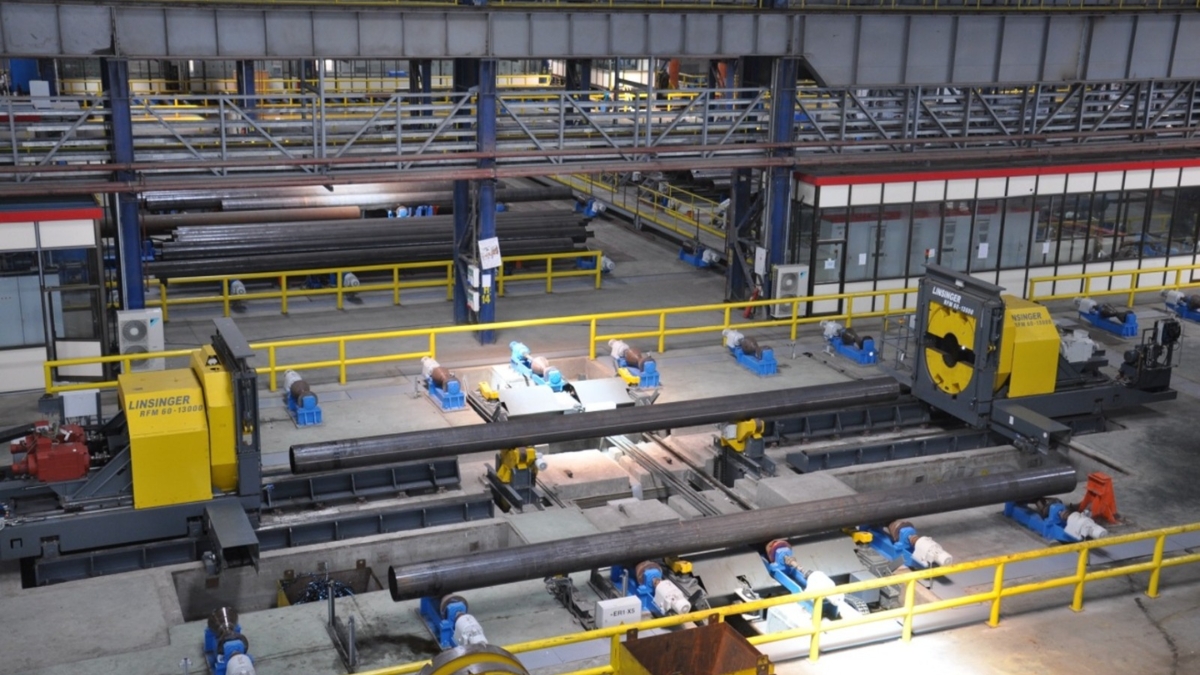
Of course, manufacturing the material consistently is where the real challenge begins.
High-strength steel welding leaves very little room for error. Heat management, weld integrity, toughness retention, and long-term reliability all have to work together. Even minor inconsistencies can affect performance, especially in offshore environments where operating conditions are unforgiving.
According to people associated with the project, the development process took nearly a year.
The Hazira team reportedly went through multiple welding trials, metallurgical studies, process refinements, validation exercises, and extensive testing before the pipes finally met ABS certification requirements.
Internally, the project was treated less like regular production and more like a dedicated engineering programme.
The significance of the development also extends beyond the technical aspect.
For years, India’s steel industry has largely been associated with scale and production capacity. Increasingly, however, companies are trying to establish themselves in specialised manufacturing segments where technical capability matters as much as output volumes.
That is where projects like EQ70 become important.
AM/NS India believes the development can help reduce dependence on imported seamless pipes used in certain offshore applications, particularly products sourced from European suppliers.
While imported material will continue to have a role in some categories, the availability of certified domestic alternatives could improve procurement flexibility for offshore contractors and engineering companies.
The timing is also interesting.
Globally, offshore exploration projects are becoming more complex as companies move toward deeper and more demanding operating environments. At the same time, energy and marine infrastructure projects are increasingly looking for materials that combine durability with lower structural weight.
That demand naturally increases the relevance of advanced grades like EQ70.
AM/NS India says the Hazira facility is now positioned to supply these welded pipes to offshore markets internationally.
The company, a joint venture between ArcelorMittal and Nippon Steel, currently operates with a crude steel capacity of 9 million tonnes per annum in India. It also maintains downstream facilities focused on value-added flat steel products and has a pellet capacity of 20 million tonnes.
Within the broader steel sector, there is also a growing focus on materials linked to future energy infrastructure.
AM/NS India has already started work on hydrogen transportation pipe grades using SAW technology, an area expected to gain relevance as countries expand investments in cleaner energy systems.
Hydrogen transport infrastructure presents its own technical demands because of pressure sensitivity, material compatibility, and long-term durability requirements. Steelmakers capable of developing solutions early are expected to gain strategic advantages as the segment evolves.
For Hazira, the EQ70 project adds another milestone to the facility’s growing role in specialised steel manufacturing.
More broadly, it reflects a transition taking place within Indian manufacturing itself — from competing primarily on production scale to building credibility in advanced engineering and high-performance industrial applications.
That shift may take time to fully play out, but developments like this suggest the direction is already becoming visible.
