

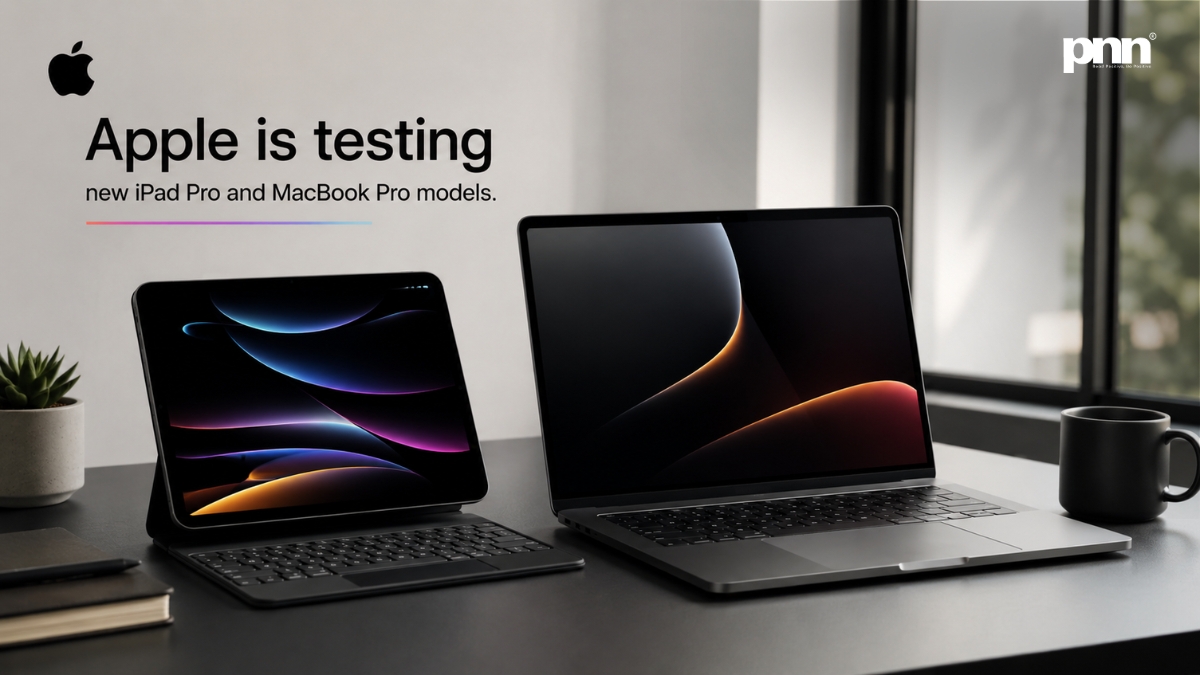
Mumbai (Maharashtra) [India], July 3: Apple has always treated product development like a carefully rehearsed magic trick. By the time the curtain rises, the audience already knows something extraordinary is coming—just not exactly how. The latest reports suggest the company is quietly testing four new iPad Pro models alongside redesigned MacBook Pro laptops, signalling that Apple’s next act may revolve less around hardware and far more around artificial intelligence.
Although Apple has not officially confirmed launch dates, reports indicate that the upcoming devices will feature next-generation Apple Silicon, improved performance, and a stronger emphasis on AI-powered capabilities. The news arrives as competition across the technology industry intensifies, with nearly every major manufacturer racing to position AI as the defining feature of modern computing.
Apple, however, appears content doing what it usually does best, arriving fashionably late, then pretending it invented the party.
The Next Generation Is About More Than Faster Chips
For years, Apple upgraded its devices by focusing on thinner designs, brighter displays, and increasingly powerful processors. While those improvements remain important, the conversation surrounding its next generation of products appears noticeably different.
According to reports, Apple is testing four new iPad Pro variants alongside redesigned MacBook Pro models powered by newer Apple Silicon chips expected to succeed the current M-series lineup. Industry observers anticipate significant improvements in AI processing, on-device machine learning, battery efficiency, and multitasking performance.
Unlike cloud-based AI services, Apple has consistently prioritised on-device intelligence, allowing many AI features to run directly on its hardware while maintaining its long-standing emphasis on privacy.
The processor is no longer just the brain of the device.
It’s quietly becoming its personality.
Apple’s AI Strategy Is Finally Taking Shape
For much of the generative AI boom, critics questioned whether it was falling behind competitors introducing chatbots, AI assistants, and enterprise AI platforms at remarkable speed.
Apple responded differently.
Rather than rushing experimental products into consumers’ hands, the company spent the past year integrating Apple Intelligence, strengthening Siri, enhancing writing tools and expanding AI capabilities across iOS, macOS, and iPadOS.
The reported testing of new iPad Pro and MacBook Pro models suggests that future hardware will increasingly be designed around AI workloads rather than simply supporting them.
That distinction matters.
It rarely builds hardware first and software later.
It prefers making both appear as though they always belonged together.
Why The iPad Pro And MacBook Pro Still Matter
Some industry analysts have questioned whether premium tablets and laptops still command the same excitement they once did.
It seems unconvinced.
The iPad Pro has gradually evolved from a media-consumption device into a platform for creative professionals, designers, filmmakers and engineers. Likewise, the MacBook Pro continues to dominate workflows involving software development, video production, music composition and artificial intelligence research.
Apple’s Mac business alone generates tens of billions of dollars in annual revenue, while the iPad remains one of the company’s strongest hardware categories despite an increasingly competitive tablet market.
If these reported upgrades successfully deliver meaningful AI performance improvements, they could strengthen Apple’s position among professionals seeking local AI processing without relying exclusively on cloud infrastructure.
The Pros And The Challenges
Every major hardware refresh creates fresh opportunities—and fresh expectations.
Potential Advantages Include:
- Faster Apple Silicon with enhanced AI performance.
- Improved battery life and energy efficiency.
- More capable on-device machine learning features.
- Greater productivity for creators, developers and professionals.
However, the anticipated launch also presents familiar challenges.
Possible Concerns Include:
- Premium pricing that may remain inaccessible for many consumers.
- Incremental hardware changes compared with previous generations.
- Growing expectations surrounding AI features that may vary by region.
- Pressure to justify upgrades for users with recent Apple devices.
Consumers no longer ask whether a new device is faster.
They ask whether it’s smart enough to replace part of their workflow.
The Bigger Picture
Apple‘s reported testing programme isn’t simply about refreshing its premium hardware lineup.
It reflects a broader transition taking place across the technology industry.
The next generation of laptops and tablets will increasingly compete not only on processing power or display quality but on how intelligently they assist users throughout the day.
Whether these devices arrive later this year or slightly beyond remains uncertain, and Apple has yet to officially confirm any launch schedule. Still, the reports reinforce one reality.
The AI race is no longer confined to chatbots.
It’s moving directly into the computers sitting on our desks and the tablets resting in our backpacks.
Perhaps Apple’s biggest challenge isn’t building faster machines anymore.
It’s convincing users that the smartest computer they’ve ever owned is also the one worth upgrading to.
