
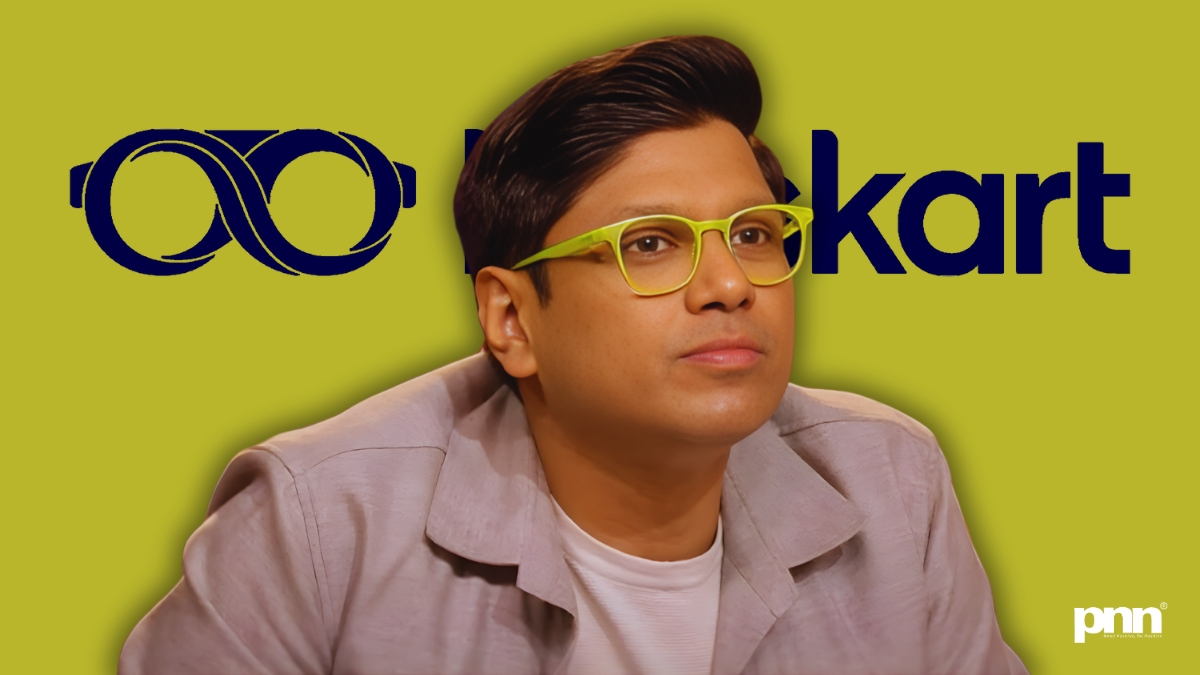
Mumbai (Maharashtra) [India], November 3: When social media called Lenskart’s ₹70,000-crore valuation “obnoxious,” Peyush Bansal didn’t flinch. For him, criticism isn’t a crisis – it’s feedback wrapped in noise. The founder who built India’s biggest eyewear brand knows one thing: if everyone’s talking, you’re doing something right.
Backlash as a Badge of Relevance
At a fireside chat with S Sharma, Bansal didn’t dodge the question. “Criticism isn’t always a bad thing,” he said, smiling. “Shark Tank has somewhat trained me for the public world.”
He added, “Sometimes criticism can be a good thing. It’s important to listen to another’s point of view, but also have your own.”
This is classic Peyush Bansal energy – calm, slightly amused, and entirely in control. The founder of Lenskart, a company now synonymous with eyewear innovation in India, is rolling out one of the most anticipated listings of the year: Lenskart IPO 2025.
The ₹7,278-crore public issue, open from October 31 to November 4, is split between a fresh issue worth ₹2,150 crore and an offer for sale of ₹5,128 crore. The price band sits between ₹382 and ₹402 per share, valuing Lenskart at roughly ₹70,000 crore (around $8 billion).
And despite the noise, the numbers speak louder than the tweets.
Lenskart IPO 2025: Fully Subscribed in a Flash
By 5:00 PM on November 3, 2025, the IPO was 2.01 times subscribed. Institutional investors (QIBs) were in at 1.64x, non-institutional investors (NIIs) at 1.88x, retail investors at 3.33x, and even employees joined the rush with 2.62x subscriptions.
Translation: everyone wanted a piece of Lenskart.
For context, the issue was fully subscribed on Day 1 – a clear sign that investors, both Indian and global, see serious potential in this brand. “I’m humbled by the Indian and global investors’ participation in Day 1 of the IPO,” Bansal said.
The listing is set for November 10 on the BSE and NSE, with allotments finalized by November 6.
The Overvaluation Debate: Loud, Familiar, and Predictable
Not everyone’s impressed. Market analyst Sandeep Sabharwal called the IPO “obnoxiously valued,” arguing that Lenskart doesn’t justify a price north of ₹15,000 crore, let alone ₹70,000 crore.
“It’s not a business that offers massive scale or growth potential, and the company just turned profitable last year,” he said. “Highly avoidable IPO.”
That’s harsh. But the criticism isn’t new. Every major Indian startup IPO – from Zomato to Paytm – has faced the same music. When consumer tech firms go public, investors split into two camps: believers in scale, and purists demanding old-school profitability.
Bansal’s take? He’s been here before. The Shark Tank India judge thrives on skepticism. For him, backlash just confirms that Lenskart is no longer a startup – it’s a public story.
A Broader IPO Reality Check
DSP Asset Managers Pvt. – one of the institutional investors in the Lenskart anchor book – had to publicly defend its decision after social media backlash. The fund called Lenskart’s business “strong and scalable,” but admitted the deal was “expensive.”
Analysts like Gaurav Garg of Lemonn Markets Desk agree the IPO is “at a significant premium” compared to global peers like EssilorLuxottica SA, the Paris-listed eyewear leader that trades at 45x forward earnings.
Meanwhile, SBICAP Securities Ltd. labeled Lenskart’s valuation “stretched,” saying near-term listing gains could be muted. Still, they advised investors to subscribe, citing brand strength and growth potential in India’s underpenetrated eyewear market.
And Choice Equity Broking’s Rajnath Yadav echoed that: profitability is thin, but the global expansion is real – about 40% of revenue already comes from overseas.
Lenskart’s Edge: Vision Beyond Eyewear
Beyond valuations, Bansal’s strategy is clear: build for the long term, not the next quarter. Half of Lenskart’s manufacturing now happens in India, a deliberate choice in a world that loves easy imports.
“The easier choice for us is to import everything,” Bansal said. “But the tough choice was to set up an engineering team, build hardware and software, and control our data. We didn’t want to be just distributors of glasses.”
That’s a mic drop moment – especially in a sector where most players are still middlemen.
Then comes the tech play. Earlier this year, Lenskart launched “Phonic” smart glasses in partnership with Qualcomm, featuring Bluetooth connectivity. A camera and video-capable version is on the way.
“I think there’s a lot of AI happening in India,” Bansal said. “It’s not just the US or China. At Lenskart, we’re high on AI – our smart glasses are proof.”
For a brand that started by selling lenses online, that’s one hell of a pivot into the future.
The Big Picture: India’s Startup Market Under Scrutiny
Lenskart’s IPO lands at a time when the Indian IPO market is buzzing but cautious. Since 2021, around 32 startups have gone public. Fourteen now trade below their issue prices – Paytm and Fino Payments Bank being the most famous casualties.
Investors have learned to ask harder questions. Are these companies profitable? Do valuations make sense? Can they sustain growth beyond the hype?
Lenskart sits right at the center of that debate. It offers scale, reach, and strong investor pedigree – with billionaire Radhakishan Damani joining the pre-IPO round with a ₹900-crore investment. Yet, the brand must prove that it can sustain its momentum while delivering consistent earnings.
From Microsoft to Market Street
Bansal’s own story mirrors his response to critics. “In my mid-year review at Microsoft, my manager said I handle criticism really well – and that was the only thing she said,” he recalled with a laugh.
That thick skin might be his biggest asset right now. As Lenskart transitions from a high-growth startup to a public company, scrutiny will only increase. And Bansal seems fine with that.
His philosophy is simple: listen, adapt, but don’t bend.
Verdict: India’s Eyewear Titan Enters a New Lens
At ₹70,000 crore, Lenskart isn’t just selling eyewear – it’s selling belief. The company’s 4–6% share of India’s prescription eyewear market leaves massive headroom for expansion, especially as unorganized local players fade out. So yes, the valuation might look stretched. The profitability might still be warming up. But the demand, brand recall, and investor faith? Hard to argue with.
The Lenskart IPO 2025 may not please valuation purists, but it’s undeniably a statement – one that says Indian consumer tech isn’t afraid to dream in billions.
Also Read: PM Modi Launches One Lakh Crore Research Innovation Drive
