

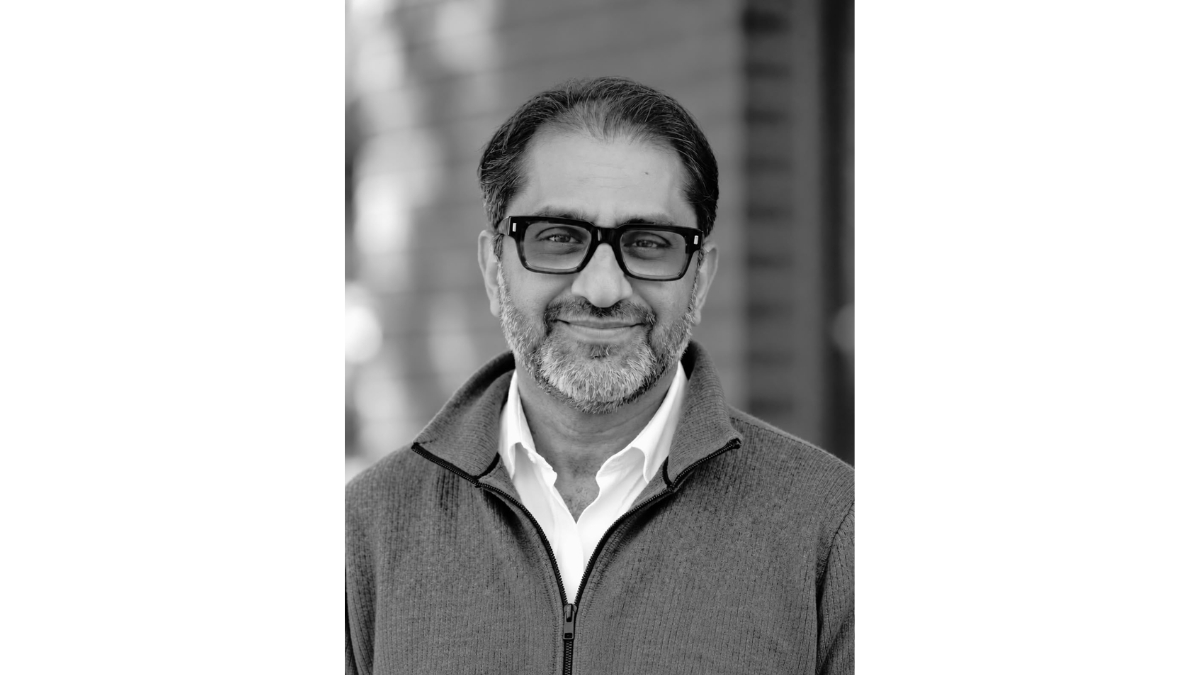
Avi Basu, Founder & CEO Of Wingsure
New Delhi [India], November 6: As agriculture faces growing climate uncertainty, fragmented information, and rising demands for accountability, Wingsure Founder and CEO Avi Basu is building a deep-tech data infrastructure platform that connects individual farm realities to the decisions shaping global agricultural value chains.
Consider a coffee farmer in Colombia who decides to renovate an aging plantation. Cutting back older trees may improve productivity over the long term, but it can also mean sacrificing income for the next two years. For the farmer, it is a calculated decision about his livelihood. For a bank it represents a financing challenge. For an insurer, it changes the farm’s risk profile. For a coffee buyer, it has implications for future supply.
Each stakeholder is looking at the same farm, yet each may be working with a different, often incomplete, picture of what is actually happening on the ground.
For Avi Basu, Founder and CEO of Wingsure, this disconnect reveals one of agriculture’s most persistent structural challenges: decisions worth billions of dollars are made across agricultural value chains without sufficient visibility into the individual farms on which those decisions ultimately depend.
Nearly 600 million farmers help power the global food system, yet many remain largely invisible to the financial institutions, markets and policy frameworks built around them. The world depends on what these farmers produce, yet the systems that finance, insure, trade and govern agriculture often know remarkably little about them – their farms, their risks, their practices or their potential.
His ambition is to help change that.
Basu believes the next significant advance in agricultural technology will come not simply from collecting more data, but from making farm-level information verifiable, continuously useful and accessible to the institutions that depend on it.
Agriculture’s Information Gap
Modern agriculture has no shortage of information. Satellites monitor vegetation, weather models forecast climatic risks, and commodity markets process enormous volumes of production and trade data.
Yet much of this intelligence operates at a level removed from the farmer.
Two neighbouring farms, growing the same crop under similar weather conditions, can experience substantially different outcomes. Soil health, crop management, water availability, pest exposure and individual farming practices can all influence productivity and resilience.
These differences matter enormously to organisations making commercial and financial decisions.
A food company needs to understand the reliability and sustainability of its supply. An insurer must distinguish between different levels of agricultural risk. A financial institution needs greater confidence in a farmer’s productive capacity. And increasingly, corporations making environmental commitments must demonstrate that agricultural practices are producing measurable results.
Traditionally, these requirements have generated separate systems of assessment, documentation and verification. The result is costly duplication, fragmented information and, frequently, additional work for farmers.
Basu sees the opportunity to establish a more consistent foundation: reliable intelligence originating at the farm itself, capable of supporting multiple decisions across the agricultural ecosystem.
From Collecting Data to Establishing Trust
Wingsure’s approach combines artificial intelligence, computer vision, geospatial intelligence, multilingual voice technology, and structured field verification to create a more detailed understanding of farm conditions and agricultural practices.
The distinction is important.
A photograph of a field is data. A photograph captured at the right location, at the right time, following a defined protocol, and assessed against relevant agricultural requirements becomes valuable evidence.
By bringing these elements together, Wingsure aims to transform individual field observations into information that businesses and institutions can use with greater confidence.
The platform is designed to guide farmers and field personnel through data collection, including in environments with limited connectivity. Multilingual voice assistance helps make complex digital processes more accessible, while computer vision and geospatial capabilities support the interpretation and validation of field observations.
Human oversight remains important where automated assessments require further verification.
For Basu and his team at Wingsure, the real value lies in connecting these capabilities into a coherent system rather than treating them as isolated technological features.
A verified record of agricultural activity can have a longer useful life than a conventional survey. It can contribute to an evolving understanding of a farm’s condition, practices, productive potential and exposure to risk.
Over time, that intelligence can become increasingly valuable as new observations build upon previous information.
One Farm, Multiple Economic Decisions
The commercial implications of this approach extend well beyond precision agriculture.
If agricultural information can be captured and verified consistently, it has the potential to connect activities that have historically operated in separate institutional silos.
A verified record of farming practices could help a buyer assess sustainable sourcing requirements. The same underlying farm intelligence, evaluated for a different purpose, could help an insurer understand exposure or provide a lender with additional context for evaluating financing opportunities.
For sustainability programmes, reliable observations can strengthen the link between commitments made at a corporate level and practices implemented in the field.
This is particularly relevant as businesses face increasing pressure to demonstrate measurable environmental outcomes rather than rely exclusively on broad estimates or self-reported information.
Wingsure’s work in coffee, including its COFFEA platform, illustrates how such an approach can be applied to a complex agricultural value chain.
Coffee connects millions of smallholder farmers with processors, exporters, global consumer brands, financial institutions and sustainability organisations. Each has distinct requirements, yet many of their decisions ultimately depend on understanding the same agricultural realities.
By connecting information about farm conditions, production practices, crop renovation, sustainability and risk, Wingsure is seeking to make that underlying intelligence useful to a wider range of stakeholders.
The opportunity is not simply to digitise existing agricultural processes. It is to reduce the information barriers separating organisations that depend on the same farms.
Making Farmers Participants in the Digital Economy
For Basu, however, a technology platform designed exclusively around institutional requirements would miss an essential part of the opportunity.
Farmers must also see tangible value.
Agricultural digitalisation has often required farmers to provide information for the benefit of others, whether through surveys, compliance procedures, financing applications or sustainability assessments. The immediate economic advantages to the farmer have not always been equally apparent.
Wingsure’s Farmer First approach seeks to address this imbalance.
An accessible digital record of a farm’s condition and management practices could help farmers demonstrate their activities more effectively, reduce repeated documentation and potentially improve access to services such as credit, insurance, advisory support and organised markets.
None of these outcomes is automatic. Access to financial products and commercial opportunities will continue to depend on individual circumstances, institutional requirements and appropriate data protections.
But the larger possibility is significant: information that farmers help create could become an asset that serves their own economic interests, rather than merely satisfying someone else’s reporting obligations.
That requires technology to be practical and inclusive.
Many agricultural communities operate with intermittent internet access, varying levels of digital literacy and strong preferences for local languages. Voice-guided interaction, simple field workflows and offline capabilities are therefore not peripheral product features. They are fundamental to whether sophisticated technology can function at an agricultural scale.
Basu’s vision also recognises that farmers possess knowledge which digital systems cannot simply replace. The role of technology is to make that knowledge more usable and verifiable, not to diminish the experience behind it.
Building the Intelligence Infrastructure for Agriculture
Wingsure’s work in India began in agricultural insurance. Spun out of SRI in 2021, it set out to bring AI-driven, mobile-based insurance and advisory services to underserved farmers, and signed an MoU with the Telangana government to do so. In 2022 it partnered with AICIL to provide curated insurance products and digital management services to farmers. That experience of bringing field evidence into risk decisions now extends to climate-smart rice, where Wingsure supports evidence capture and practice monitoring, including Alternate Wetting and Drying, so programme managers can follow implementation across participating farms. Stronger evidence of practice adoption supports monitoring, verification and reporting. Claims about water savings or emissions still require additional measurement under the applicable methodology. What makes Wingsure’s ambition potentially significant is the shift from individual agricultural applications towards a broader intelligence infrastructure.
Agricultural technology has historically developed around specific problems: estimating yield, monitoring crops, processing insurance claims, measuring sustainability, or evaluating credit worthiness.
Each application has its own value. But when the underlying farm information remains disconnected, the broader ecosystem continues to operate inefficiently.
Basu envisions a different model in which verified farm intelligence can support multiple services, subject to appropriate permissions, without every institution having to recreate the same information from the beginning.
Such an approach could also become increasingly relevant to global commodity markets, where better visibility into production conditions and agricultural risk can influence supply planning, procurement and financial decision-making.
There are practical challenges to realising this vision. Agricultural conditions change constantly, field information requires robust quality controls, and different institutions need different levels of verification. Data governance, farmer trust and economic viability will be as important as technological sophistication.
Wingsure’s challenge, therefore, is not merely to demonstrate what artificial intelligence can recognise, but to establish how reliable farm intelligence can be delivered repeatedly, affordably and at scale.
For Basu, that is where the deeper transformation lies.
Agriculture will always be exposed to forces beyond anyone’s control, from erratic weather and biological uncertainty to fluctuating markets. Technology cannot eliminate those risks.
But it can change how clearly they are understood, how early they are recognised and how effectively institutions respond.
The next chapter of agricultural innovation may ultimately be defined not by how much more information the world collects about agriculture, but by how much better it understands what is happening on each farm – and how that understanding translates into better decisions, stronger businesses and more resilient livelihoods.
That is the future Wingsure is working to build.
