

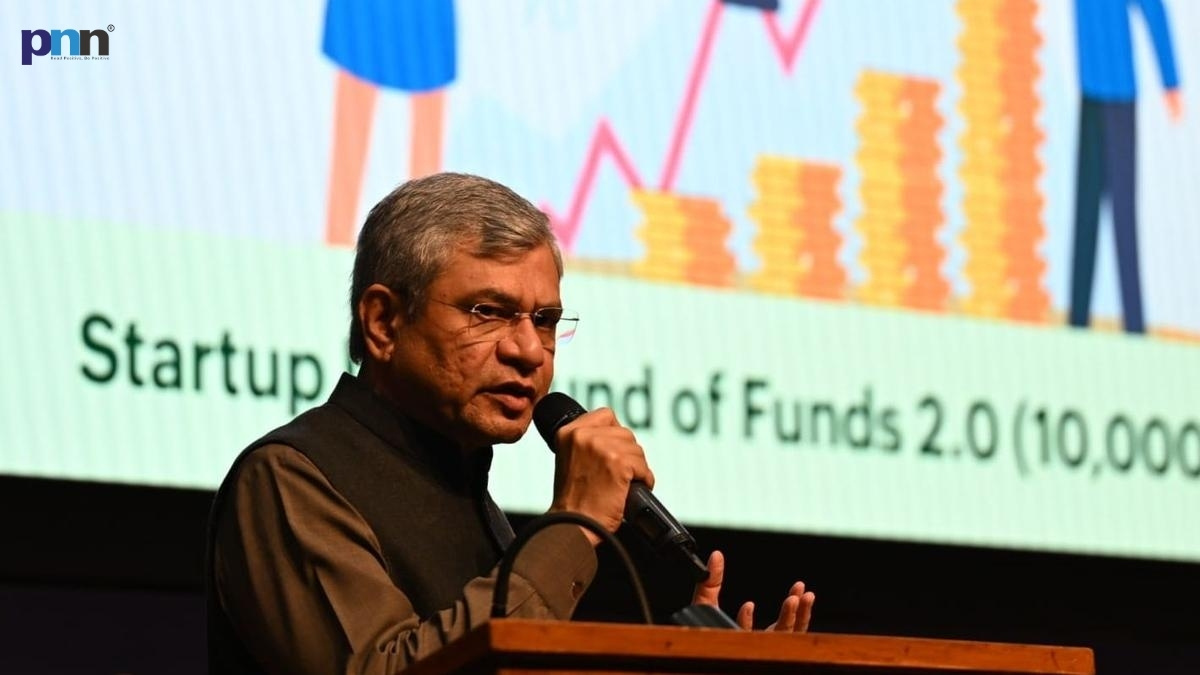
New Delhi [India], February 14: Startup India Fund of Funds 2.0 comes at a time when capital discipline has replaced capital excess. Valuations are sober. Due diligence is regaining prominence. Founders are being evaluated less on pitch decks and more on execution.
Against this backdrop, the Union Cabinet’s decision to approve a Fund of Funds with a ₹10,000 crore corpus is not a vanity announcement. It is a stabiliser.
This is not about sprinkling cash among startups. It is about strengthening the plumbing of the Indian venture capital system so that good companies do not perish during periods of market conservatism.
What Has Been Approved
The Cabinet has approved Startup India Fund of Funds 2.0 with a total corpus of ₹10,000 crore, to be disbursed over time through SEBI-registered Alternative Investment Funds (AIFs).
The structure remains aligned with the original design philosophy. The government does not invest directly in startups. Instead, it acts as a catalytic investor in professionally managed venture funds.
Implementation will continue through Startup India, with supervision by selected public financial institutions.
This is policy forbearance in action. No drama. No disruption. Just scale.
Why a Fund of Funds, Not Direct Cheques
Governments are not venture capitalists, and they should not attempt to act like one.
The Fund of Funds model recognises this reality. Rather than selecting winners from North Block, the state backs fund managers who understand opportunity, risk management, and founder dynamics.
This approach offers three clear advantages.
First, it multiplies impact. Every rupee invested by the Fund of Funds tends to attract several more rupees of private capital.
Second, it avoids bureaucratic micromanagement.
Third, it builds a long-term venture ecosystem instead of short-term subsidy dependence.
Startup India Fund of Funds 2.0 remains firmly rooted in this logic.
Lessons from the First Fund of Funds
The original Fund of Funds, launched in 2016 with an announced corpus of ₹10,000 crore, played a subtle but significant role in India’s startup decade.
Official data shows commitments to dozens of AIFs, which in turn supported hundreds of startups across sectors such as fintech, healthtech, SaaS, agritech, and deep tech.
It did not create unicorns overnight. That was never the objective.
What it did was enable early- and growth-stage funding at a time when India’s domestic venture capital base was still evolving. Many of today’s established fund managers emerged from that period.
Fund of Funds 2.0 builds on this institutional memory.
What Changes with Startup India Fund of Funds 2.0
The environment has evolved, and the design reflects that shift.
India today has a larger and more diverse startup universe. There are more regional founders, more sector-specialist funds, and increased focus on hardware, climate technologies, and manufacturing-linked innovation.
The second fund is expected to place greater emphasis on:
-
Early-stage capital gaps
-
Emerging fund managers
-
Sector-focused AIFs
-
Wider geographic reach beyond metros
This is less about chasing headlines and more about expanding the base.
In simple terms, less froth and more fundamentals.
India’s Startup Moment in 2026
India no longer needs to prove that it can create startups. That debate is settled.
The more pressing question is whether the ecosystem can produce sustainable companies at scale, across economic cycles.
The approval of Startup India Fund of Funds 2.0 signals that the government understands this transition. The goal is not speed. It is sustainability.
This matters because global capital is watching closely. Long-term investors favour countries that demonstrate policy consistency, capital depth, and institutional maturity. Trend chasers do not.
Once again, India is choosing the quieter but more effective path.
Implications for Founders and Investors
This does not make money easy for founders. It makes money available.
Capital will remain selective. Tough questions will continue. Burn rates will be scrutinised. That is healthy.
For venture capital firms, especially first- and second-time managers, Fund of Funds 2.0 adds credibility. A government anchor investment can often determine whether a fund closes or stalls.
For the broader economy, it reinforces a simple truth. Innovation is no longer peripheral. It has become core infrastructure.
The Global Capital Signal
This is also a message to the world.
At a time when many economies are tightening their belts, India is signalling continuity. Rules are not being rewritten mid-cycle. The state is not stepping back from innovation financing.
That predictability matters to long-horizon investors who value stability over hype.
It also aligns with India’s broader push in manufacturing, digital public infrastructure, and technology-driven growth.
