

Raipur (Chhattisgarh) [India], November 1: The war against Maoism in India has turned a corner. Prime Minister Narendra Modi says the red flag of rebellion has finally bowed to the national flag – and this time, the results back him up.
From Red to Saffron-White-Green
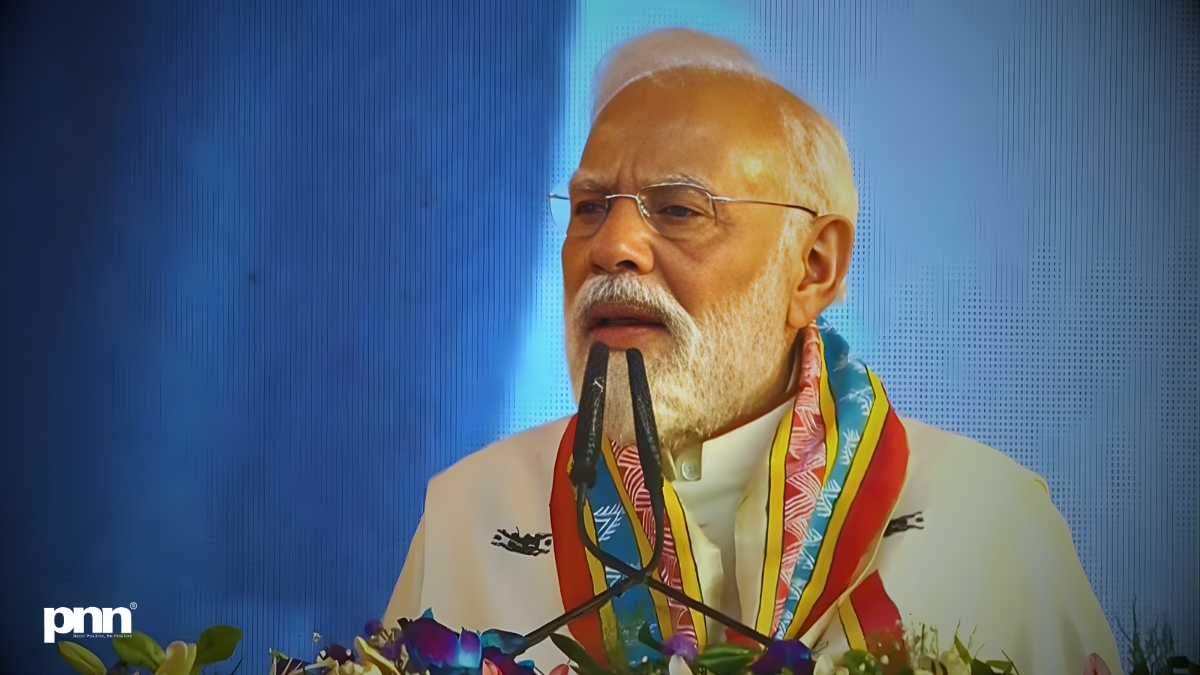
In Raipur’s Atal Nagar, PM Modi didn’t mince words. “Tiranga has replaced the red flag,” he told a roaring crowd during the Chhattisgarh Rajat Mahotsav. The symbolism was deliberate – and sharp. For decades, large parts of central India were held hostage by Maoist control. Today, the Prime Minister claims, that story is ending.
According to PM Modi, the number of Maoist-dominated districts has fallen from 150 a decade ago to just three – all in Chhattisgarh: Bijapur, Sukma, and Narayanpur. “I guarantee that the day is not far when India and Chhattisgarh will be rid of Maoism,” he said, sounding less like a politician and more like a man closing a long chapter of violence.
The Numbers Don’t Lie
The Union Home Ministry’s latest data backs the Prime Minister’s claim. As of October 2025, Left-Wing Extremism (LWE) impacts just 11 districts nationwide, down from 18 earlier this year. Compare that to 126 in 2013, and you start to see the scale of what’s changed.
This isn’t political spin; it’s quantifiable progress. The government’s multi-pronged counter-insurgency approach – combining security operations, road and power projects, and surrender-and-rehabilitation programs – appears to be working.
In just the past month, over 200 Naxals surrendered in Bastar and 20 more in Kanker. These aren’t nameless rebels either – several carried bounties worth crores. They’ve now traded jungle warfare for citizenship papers and a fresh start.
Adivasi Areas Finally See Development
For the first time in decades, light – literal and symbolic – is reaching remote villages. PM Modi cited Bijapur’s Chikkapali, which got electricity after 70 years, and a school being built in Abujhmarh – a first since Independence.
That’s not just infrastructure; it’s transformation. In a region long written off as a “red corridor,” new roads, schools, and medical camps are now replacing checkpoints and encounter zones.
PM Modi’s tone turned emotional when addressing the Adivasi community: “Those who pretended to follow the Constitution and spoke of social justice did injustice to you for political gain.” It was part empathy, part indictment – and fully on brand for a leader positioning himself as the cleaner of a national wound.
The Cost of Maoism – And the Comeback
Let’s not sugarcoat it. For years, Maoist violence turned entire districts into no-go zones. Teachers, doctors, engineers – anyone serving the state – were targets. Infrastructure stagnated, and development stopped at the district border.
That’s the context behind PM Modi’s assertion: “For decades, those who ruled left you to fend for yourself while they sat in AC rooms enjoying life.” It’s political theater, yes – but it also echoes what locals have lived through.
By contrast, the central government’s post-2014 strategy made it personal. Security forces got better intelligence, coordination between states improved, and crucially, development began moving faster than ideology. When schools, clinics, and mobile towers arrived, propaganda lost its audience.
India’s Counter-Insurgency Pivot
Delhi’s playbook shifted from “hunt and neutralize” to “reform and rebuild.” A combination of security pressure, welfare delivery, and surrender policies now defines India’s LWE response. The government’s target: complete Maoist eradication by March 31, 2026.
It’s ambitious, but not impossible. What’s working in Bastar could become the template for India’s other internal security challenges – from militancy in the northeast to extremism elsewhere.
Even former sceptics in the security establishment acknowledge the shift. “The reduction from 150 to three affected districts is not luck; it’s persistence,” a senior officer said earlier this month.
From Fear to Festivals
PM Modi summed it up neatly: “In Bastar, there is no fear but celebration.” That line captures the psychological turnaround more than any statistic could. When people stop whispering about ambushes and start planning cultural fairs, that’s victory of a different kind.
Chhattisgarh’s Adivasi heartland, once synonymous with landmines and ambushes, is now on the verge of normalcy. With every surrender and every new road laid, the red flag fades a little more.
Beyond Chhattisgarh
India’s Maoist problem was once continental – spanning Jharkhand, Odisha, Bihar, Maharashtra, Telangana, and Andhra Pradesh. Today, the crisis has largely contracted to a handful of southern Chhattisgarh pockets.
This contraction aligns with India’s broader growth narrative – the shift from conflict zones to emerging markets. When a region once controlled by insurgents begins building schools and solar grids, it’s not just national security; it’s nation-building.
The Final Stretch
There’s still work to do. The Maoist ideology won’t vanish overnight. But it’s running out of ground – both literal and ideological. The youth who once joined armed groups now have smartphones and job offers. The state’s message is clear: the gun is out of style; growth is the new revolution.
As PM Modi put it, “The day is not far when the red flag will be history.” That’s more than rhetoric. It’s the country finally catching up to its own promise.
Also Read: India’s War on Naxalism: A Decade of Grit and Growth
