


New Delhi [India], October 30: Global industrial operations are routinely undermined by a persistent paradox: manufacturing facilities outfitted with cutting-edge automation, lean workflows, and heavy capital investments still suffer from inexplicable margin compression, sudden mechanical breakdowns, and recurring supply chain deadlocks. Seeking to bridge this gap between engineering investments and actual operational yield, research-led organization MahaVastu has published an industrial blueprint titled Industrial Vastu: Transforming Global Industrial Challenges into Productive Excellence, authored by founder VastuShastri Khushdeep Bansal.
The methodology redefines spatial optimization by treating industrial architecture as a functional management parameter rather than a matter of superstitious compliance. Instead of relying on structural alterations, the framework introduces an empirical, diagnosis-driven model that maps eight core manufacturing friction points directly to specific corporate objectives across sixteen directional zones.
The framework shifts away from traditional aesthetic assessments by evaluating spatial vectors strictly through their operational outcomes. Directional financial zones are analyzed to alleviate margin erosion and accelerate cash flow turnaround, while throughput and maintenance vectors correlate directly with equipment staging zones to mitigate unscheduled factory downtime. Concurrently, client acquisition zones are audited to ensure steady commercial inquiry volume and customer conversion, and human-resource and leadership zones are balanced to resolve persistent labor turnover, shop-floor friction, and stalled plant expansions.
Rather than confining its review to floor plans, the system applies a comprehensive, top-down audit across five distinct structural tiers:
- Macro Environmental Zone (Layer 1): Audits ambient kinetic forces outside the facility gates, including incoming approach roads, T-junction hits, municipal waste infrastructure, natural water bodies, and adjacent high-rises.
- Boundary & Perimeter Geometry (Layer 2): Examines plot contours, ingress/egress gate alignment, perimeter wall cracks, sub-surface cabling, and drainage flow lines.
- Peripheral Setback Corridors (Layer 3): Analyzes logistics corridors, external inventory staging depots, and perimeter utility arrays.
- Primary Building Shell (Layer 4): Evaluates building color spectrums, heavy utility intake hubs, high-voltage transformers, and primary entry portals.
- Micro-Process Workstations (Layer 5): Conducts granular assessments across eighteen sequential manufacturing stages—tracking materials from intake and fabrication to quality control, assembly, and outbound shipping.
A major advancement within the system is its functional redefinition of an environmental defect, or Vastu Dosha. The framework evaluates spatial features strictly by their operational impact on work processes. For instance, an incoming Northern approach road is not judged as an abstract layout concern; rather, it is diagnosed as a vector of high-velocity kinetic wind turbulence destabilizing the facility’s commercial inquiry zone, manifesting practically as volatile client order pipelines.
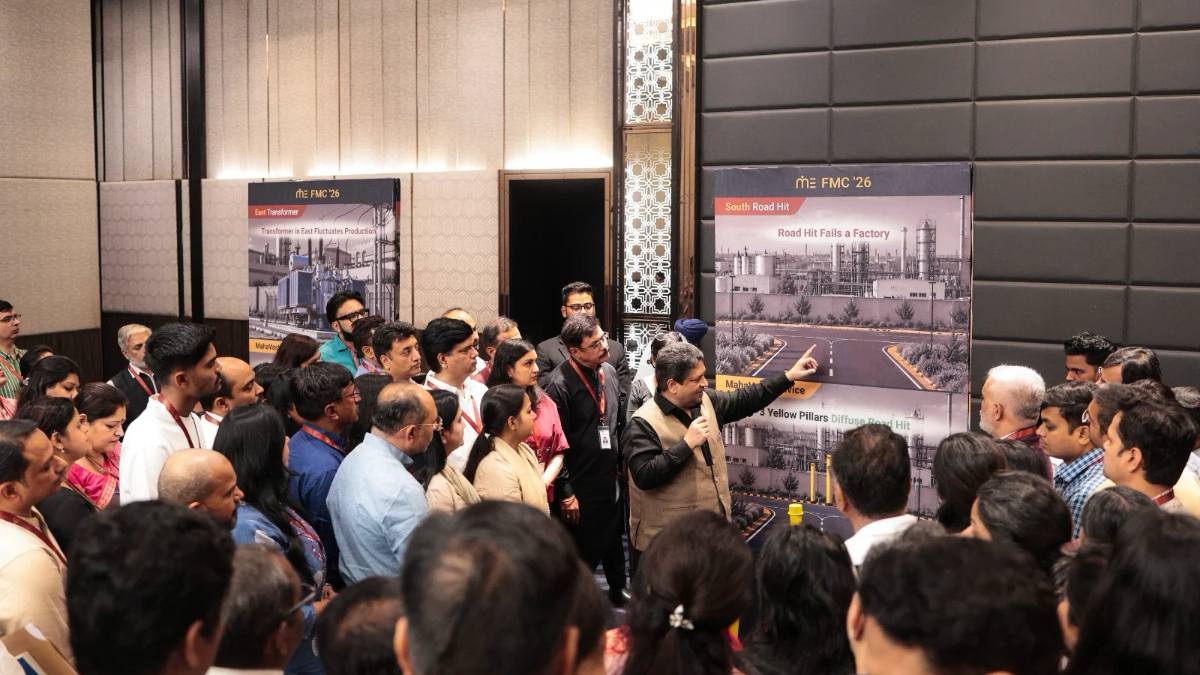
To eliminate costly plant shutdowns and machine relocations, the remediation strategy is entirely non-invasive. Rooted in the five elemental states (Panch Tatva), physical mismatches are resolved using elemental color recalibrations, precise metallurgical strips embedded along directional seams, and targeted spatial balancers. Plant operators validate interventions through standard quantitative tracking protocols, cross-referencing pre- and post-implementation metrics such as Mean Time Between Failures (MTBF), total quality rejection percentages, and overall operational throughput.
To ensure global standardization, the methodology is actively disseminated through the specialized Factory MahaVastu program. Having instructed more than 150 plant managers, industrial consultants, and structural engineers, the training initiative equips technical leaders with the analytical tools needed to read complex blueprints through a sixteen-zone spatial matrix.
The publication reflects over three decades of empirical documentation compiled across industrial clusters. By integrating ancient spatial science into modern industrial engineering, the methodology presents manufacturing enterprises with a non-destructive roadmap to optimize floor-space assets and protect long-term capital efficiency.
For a deeper look into how these industrial diagnostic principles are implemented by certified professionals, watch this Factory MahaVastu Advisors Overview, which features VastShastri Khushdeep Bansal explaining the core curriculum and technical perspectives behind applying MahaVastu remedies within industrial manufacturing environments.
