

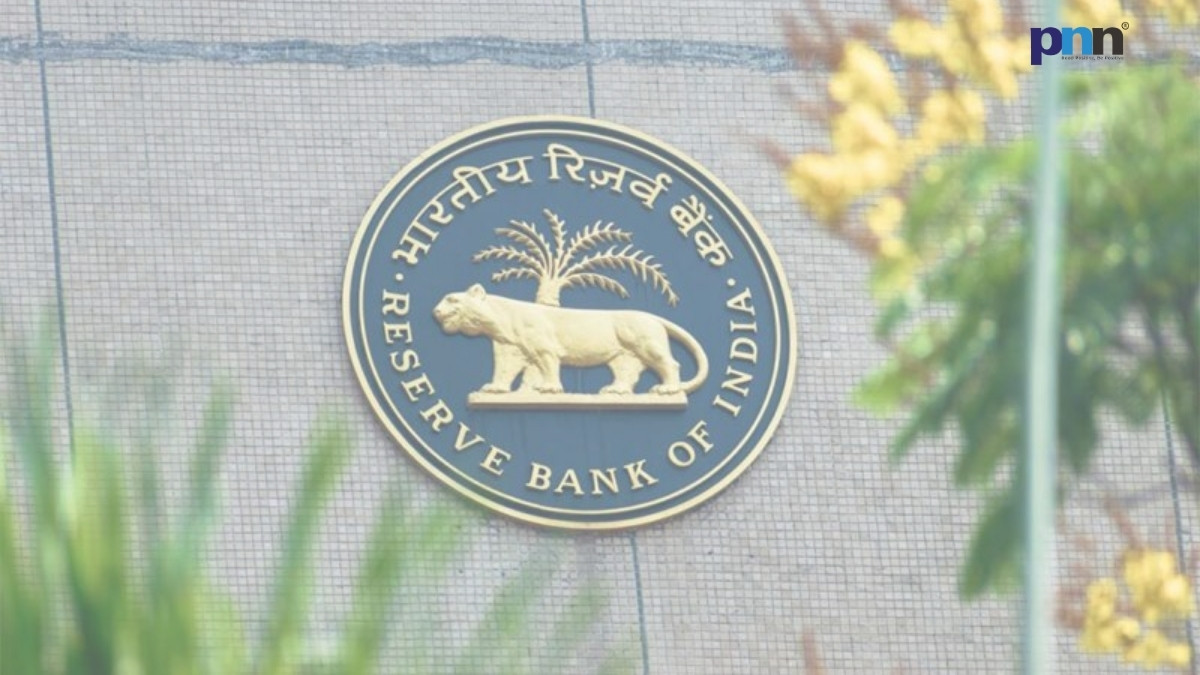
New Delhi [India], April 07: A steady hand at the wheel: how India is quietly balancing growth, inflation, and global uncertainty without hitting the brakes
There’s something oddly calm about India right now. Not quite, definitely not that, but steady. Grounded. Like a train moving fast but not rattling off its tracks.
And honestly, in a world that feels like it’s constantly one headline away from chaos, that steadiness matters more than we admit.
So yeah, as April kicks in and the Reserve Bank of India gears up for its policy announcement, this doesn’t feel like just another routine update. It feels… intentional. Almost like someone’s actually thinking long-term for once.
Growth, but the kind you can actually feel
Let’s start with the obvious. Growth.
A projected 7.4% GDP for FY26 isn’t just a number you throw into a PDF and forget. It’s a signal. A pretty loud one, actually. Because while a lot of economies are dragging their feet—or worse, quietly slipping backward India’s still pushing ahead. Not perfectly, sure. But with momentum.
And where’s that coming from? Not one place.
It’s in the everyday stuff. People are spending again. Rural demand picking up—finally. I was in a Tier-2 town a few months back (don’t ask me why, long story), and you could literally feel the difference compared to last year. Shops busier. Conversations less… cautious.
Then there’s investment. For the longest time, private players were just watching from the sidelines, waiting for the government to do the heavy lifting. Now? They’re slowly stepping in. Capacity utilization’s up, factories are humming a bit louder, and companies are, yes, cautiously but actually, putting money to work.
Trade’s another quiet win. Those India-EU and India-US deals? They’re not flashy right now, but give them time. These things compound. Slowly, then suddenly.
Why steady interest rates might be the real story
But here’s the part people really care about. Interest rates.
Or more specifically, EMIs.
And look, this is where the RBI’s playing it smart. Holding the repo rate at 5.25% might not sound exciting. It’s not supposed to be. Stability rarely is.
But if you’ve got a home loan, or you’re running a small business where every percentage point kinda hurts, this matters. A lot.
Because predictability? That’s underrated. You can plan around it. Build around it. Sleep better because of it.
And then there’s that MSME move, collateral-free loans bumped up to ₹20 lakh. That’s not just policy talk. That’s someone, somewhere, deciding they can finally expand their workshop or hire two more people without risking their entire life savings.
It’s small. But it’s not small.
Handling inflation without hitting the panic button
Now, the tricky bit. Inflation. Or more precisely, imported inflation.
Oil above $100. West Asia tensions are doing their usual thing. The kind of stuff that’s completely out of India’s control, and yet somehow always ends up affecting the price of your morning chai.
But here’s where it gets interesting.
Instead of panicking, and central banks do panic sometimes, the RBI is treating it like what it is: a supply-side issue. Not something you crush with aggressive rate hikes and hope for the best.
They’re managing the rupee carefully. Not dramatically, just… carefully. Enough to avoid wild swings. Enough to keep things boring. And boring, in currency markets, is actually great.
Meanwhile, domestically? Inflation’s behaving. Core numbers are stable. Food prices, fingers crossed, should stay in check with a decent Rabi harvest.
And those GST collections crossing ₹2 lakh crore? That’s not just a brag stat. It gives the government room to absorb shocks without passing everything onto consumers.
So yeah, it’s not perfect. But it’s under control. Mostly.
The long game: beyond just one policy cycle
Somewhere in all of this is the bigger picture. The “Viksit Bharat 2047” idea. And I know these long-term visions can feel a bit… distant. Almost abstract.
But then you look at the pieces.
A central bank that’s not overreacting.
An economy that’s still growing when others aren’t.
Policies that, for once, seem aligned instead of working at cross purposes.
And you start to think, okay, maybe this isn’t just talk.
Maybe India really is shifting from reacting to global trends… to shaping its own path. Bit by bit.
Anyway, stepping back.
What we’re seeing right now isn’t dramatic. No big shocks. No surprise moves. And that’s exactly the point.
It’s controlled. Deliberate. Almost… boring.
But in a world addicted to volatility, boring might just be the biggest flex.
And if this balance holds growth on one side, stability on the other—then yeah, this “Goldilocks” phase people keep talking about? It might actually be real.
Or at least, real enough to matter.
