

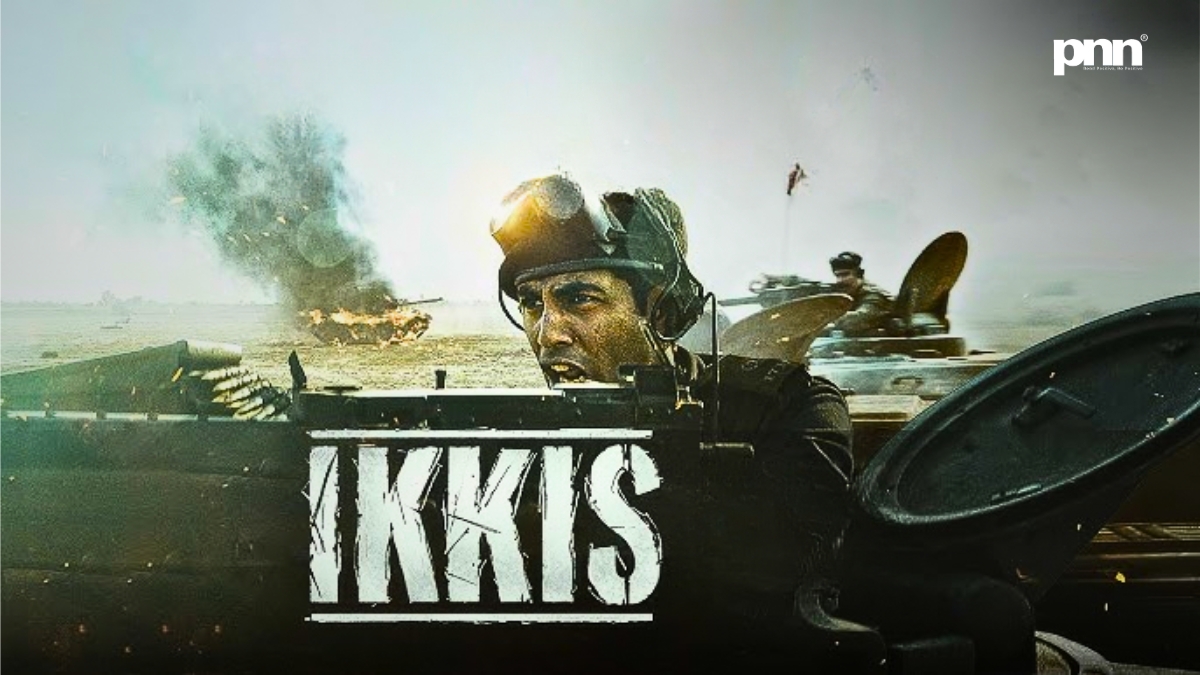
Mumbai (Maharashtra) [India], December 31: There are films that arrive quietly. And then there are films that arrive already apologising for the noise around them. Ikkis belongs to neither category. It arrived mid-conversation, mid-controversy, and mid-collision—between creative stubbornness and an industry addicted to optics.
At first glance, Ikkis looks like an unlikely headline-maker. It doesn’t come wrapped in franchise armour. It doesn’t promise scale-for-scale destruction. It doesn’t flirt with algorithmic heroism. And yet, it has found itself entangled in debates about casting exits, box office survival, artistic refusal, and the uncomfortable truth that sometimes, a filmmaker choosing “less” feels like rebellion.
Let’s talk about what actually happened—without the hysteria, but with the honesty.
A Film That Was Never Meant To Be Loud
Ikkis was conceived as a grounded, character-driven narrative rooted in restraint rather than roar. From the beginning, the intent was clear: this wasn’t meant to chase mass hysteria or engineered applause breaks. It was shaped to sit in the uneasy space between introspection and silence—a space many contemporary releases actively avoid.
That creative DNA explains much of what followed.
When a prominent mainstream actor was initially attached and later exited the project, the industry predictably reached for drama. Speculation bloomed faster than facts. Ego? Creative differences? Commercial anxiety? The truth, as clarified later, was far less scandalous and far more revealing: the film simply wasn’t aligned with the persona expectations surrounding that casting.
In an industry where star images are often louder than scripts, Ikkis quietly chose coherence over comfort.
A dangerous move. Also, a necessary one.
Casting Changes Aren’t Crimes—They’re Creative Boundaries
Let’s puncture a myth here: casting changes are not moral failures. They are editorial decisions.
The replacement wasn’t about downgrading scale; it was about recalibrating tone. Ikkis required vulnerability without performance fireworks. It required faces that disappear into the narrative rather than bend it around themselves. That’s not an insult—it’s a genre requirement.
The current cast, led by younger, less overexposed performers alongside seasoned veterans, gives the film something rare: emotional believability without preloaded baggage. The chemistry doesn’t scream for attention. It waits. And that patience is the film’s biggest asset—and its biggest commercial risk.
Box Office Reality: Numbers Don’t Lie, But They Don’t Tell The Whole Story Either
Let’s address the uncomfortable part.
Early box office projections for Ikkis were modest—opening estimates hovering in the lower single-digit crore range. Against a competing release engineered for dominance, the contrast was brutal. Screens were limited. Show timings were unfriendly. The marketing volume was deliberately muted.
In pure arithmetic terms, Ikkis was never built to “win” opening weekend.
But here’s the part the numbers don’t capture: audience retention.
Initial reports point to steady occupancy growth in evening shows, stronger performance in urban centres, and word-of-mouth that leans quietly positive rather than hysterically viral. It’s not trending—it’s lingering. And in a climate obsessed with first-day validation, longevity has become a radical metric.
From a budget standpoint, Ikkis reportedly operates within a controlled mid-range production cost—far from spectacle-heavy extravagance. That fiscal restraint means the film doesn’t need miracle numbers to survive. It needs time. And time, ironically, is the one luxury modern releases rarely receive.
Why Refusing “That Kind Of Cinema” Matters
One of the most telling statements surrounding Ikkis wasn’t about box office at all. It was a philosophical one.
The film’s creative leadership openly distanced itself from a style of cinema built on constant escalation—bigger villains, louder heroism, moral shortcuts disguised as nationalism or nostalgia. Not because such films don’t work—but because this film was never meant to.
That refusal matters.
Because it reintroduces a forgotten idea into mainstream discourse: not every film needs to compete on the same battlefield. Some films are meant to survive quietly, not conquer noisily.
Of course, this stance comes with consequences. Reduced screens. Reduced hype. Reduced tolerance from an audience trained to expect spectacle as default. The industry doesn’t punish silence maliciously—it simply doesn’t know how to amplify it.
The Pros Nobody Is Screaming About
-
Narrative Integrity: The film doesn’t bend its spine to trends. That’s rare.
-
Performance-First Casting: Characters feel inhabited, not performed.
-
Budget Discipline: Financial realism gives the film breathing room post-theatrical.
-
Longevity Potential: Streaming, satellite, and international circuits may prove kinder than opening weekend math.
The Cons Everyone Pretends Not To Notice
-
Limited Mass Appeal: This is not comfort food cinema. Some viewers will walk out restless.
-
Marketing Minimalism: In a noisy marketplace, understatement risks invisibility.
-
Timing: Releasing alongside a juggernaut was brave—or reckless, depending on perspective.
-
Expectation Mismatch: Audiences walking in expecting fireworks may feel emotionally underfed.
Both things can be true: the film can be good and commercially vulnerable.
The Backstory That Explains Everything
Ikkis wasn’t born from an algorithmic pitch deck. It was shaped slowly, rewritten often, and protected fiercely. Its creative process favoured precision over panic. That alone places it at odds with a system currently built for speed and scale.
In many ways, the film feels like a deliberate throwback—to a time when directors trusted viewers to meet them halfway, when silence was allowed to breathe, when storytelling didn’t apologise for being patient.
That doesn’t guarantee success. But it guarantees identity.
The Latest Pulse
As of now, the film continues to hold select urban screens with stable occupancy. Audience reactions skew thoughtful rather than euphoric. Industry chatter has shifted from dismissal to cautious respect. The conversation is no longer “why didn’t it open bigger?” but “how long will it last?”
That’s a better question.
What Ikkis Really Represents
This isn’t just about one film or one casting exit. Ikkis represents a quiet standoff between two philosophies of cinema:
One that believes relevance must be immediate, loud, and dominant.
Another that believes relevance can be slow, subtle, and stubborn.
Neither is wrong. But they cannot coexist on the same metrics.
Ikkis may never become a box office headline. It may never trend for the “right” reasons. But it will remain something rarer—a film that knew exactly what it was, and refused to become something else just to be liked.
And in an industry that often confuses noise with impact, that refusal is its most radical act.
